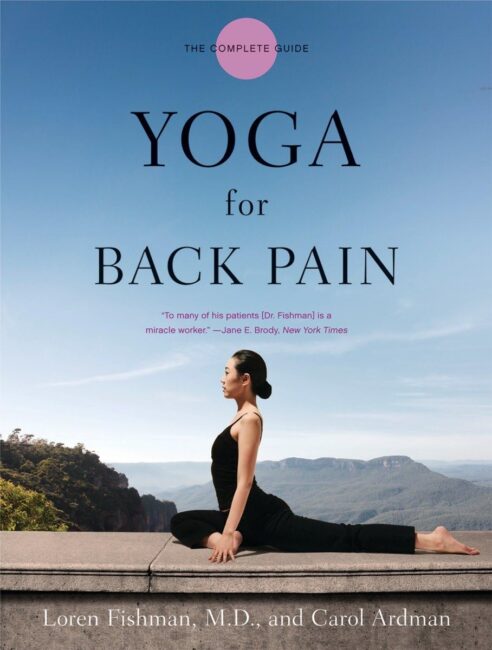
Back pain affects millions of people, yet many books offer the same generic advice: stretch more, strengthen your core, and improve your posture. Yoga for Back Pain by Dr. Loren Fishman takes a different approach by recognizing that not all back pain has the same cause—and therefore shouldn’t be treated the same way.
Dr. Fishman, a physician specializing in physical medicine and rehabilitation, combines his medical background with decades of yoga experience to create a practical guide for people looking to better understand and manage their discomfort. Rather than presenting yoga as a one-size-fits-all solution, the book focuses on matching specific yoga poses to different types of back conditions.
A Diagnosis-First Philosophy
One of the book’s greatest strengths is its emphasis on identifying the source of pain before recommending exercises.
Instead of encouraging readers to perform the same stretches regardless of their symptoms, Dr. Fishman explains that issues such as herniated discs, arthritis, spinal stenosis, piriformis syndrome, and muscle imbalances often require different approaches. That concept alone helps separate this book from many general fitness or self-help guides.
Easy to Follow
Although some familiarity with yoga is helpful, the book is designed so beginners can follow along.
Each posture includes photographs, detailed instructions, and notes about who should—or shouldn’t—perform the movement. Modifications are also included, making many of the poses accessible for readers who have limited flexibility or reduced mobility.
Rather than trying to impress experienced yogis, the book focuses on helping everyday people move more comfortably.
What Makes It Different?
Many back pain resources concentrate solely on strengthening muscles or reducing inflammation. Yoga for Back Pain instead emphasizes improving mobility, balance, flexibility, breathing, and posture while tailoring exercises to individual conditions.
That personalized philosophy reflects modern thinking that back pain often has multiple contributing factors and may respond better to targeted movement than simply resting or avoiding activity altogether. Research on yoga for chronic low back pain suggests it can provide modest improvements in pain and physical function for many people, although results vary by individual and condition.
Who Should Read This Book?
This book is an excellent resource for:
- Adults with recurring lower back pain.
- People interested in conservative, non-surgical approaches.
- Yoga practitioners wanting a better understanding of spinal health.
- Individuals looking to supplement physical therapy or physician recommendations with guided movement.
It is less suited for someone looking for a quick “10-minute fix.” Instead, it encourages readers to understand the mechanics of their back pain and build healthier movement habits over time.
Final Thoughts
Yoga for Back Pain stands out because it blends medical knowledge with practical yoga instruction instead of relying on vague wellness advice. Dr. Fishman approaches back pain as a problem that deserves careful evaluation, not a condition with a universal solution.
For readers willing to invest some time learning about how their spine works and practicing the recommended movements consistently, this book offers a thoughtful and evidence-informed approach. While no single book can eliminate every cause of back pain, Yoga for Back Pain provides useful tools that many readers may find valuable as part of a broader strategy for improving mobility, reducing discomfort, and maintaining long-term spinal health.