Open post

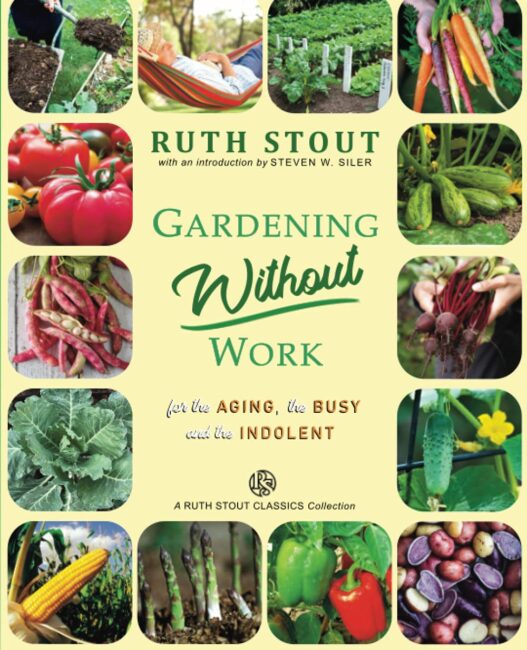
Gardening Without Work: Why Ruth Stout’s Book Still Makes Sense

A garden can start as a pleasant idea and quickly fill your weekends. You picture fresh tomatoes and flowers beside the back door. Then come the weeds, the digging, and another afternoon spent trying to keep everything under control.

That is what makes Ruth Stout’s Gardening Without Work: For the Aging, the Busy and the Indolent appealing. She asks a useful question: how much of that work do we actually need to do?

First published in 1961, the book describes her approach to gardening with a permanent covering of organic mulch. It also reflects her determination to enjoy growing things without letting the chores take over her life.

Based on the published excerpts and contents, I think its greatest strength is the permission it gives gardeners to simplify.

A Simple Idea With Practical Benefits

Stout’s method centers on keeping the ground covered with organic material and adding more as it breaks down. Instead of repeatedly turning the soil and hoeing between plants, she lets that covering do much of the work.

The idea has practical support. Mulch helps suppress weeds, slows moisture loss, and contributes organic matter as it decomposes. Over time, those benefits can reduce the need for frequent cultivation and watering.

For someone who enjoys growing vegetables but dislikes spending every visit pulling weeds, that is a worthwhile change. You still tend the garden, but more of your attention can go toward the plants you intended to grow.

Her Attitude Is Part of the Appeal

The published excerpts suggest a writer who enjoyed questioning familiar advice. Stout is funny, direct, and thoroughly convinced by what she observed in her own garden. She explains her approach through experience, with plenty of personality along the way.

That makes the book appealing to someone who feels overwhelmed by gardening instructions. There is always another technique to learn, another tool to buy, or another job somebody says must be done before planting.

Stout’s approach encourages you to look closely at those jobs. If a simpler method works in your garden, you have a reason to use it.

I like that attitude. People with limited time or energy deserve a garden they can enjoy, and an experienced gardener’s willingness to simplify can be more encouraging than a long list of ideal conditions.

The Title Needs a Little Perspective

Gardening Without Work is a memorable title, though obtaining and spreading mulch is work in itself. Planting, harvesting, and watching for problems also remain part of gardening.

My reading of the promise is that the method can remove a substantial amount of repeated effort. Carrying mulch to a bed may save you from hoeing that same bed over and over.

The size of the garden matters, too. A small vegetable patch is a reasonable place to try the approach. Covering a large area requires more material and more effort to move it.

For a busy gardener, starting small makes the idea easier to put into practice. You can see what changes over a season before expanding.

Her Experience Is a Starting Point

Stout developed her approach in Connecticut. That matters when considering how closely to follow her recommendations elsewhere.

In a dry Southern California garden, I would use the book as inspiration and adapt the method to local conditions. Mulch can help retain moisture, but I would still plan for irrigation. Current extension guidance describes mulch as reducing watering needs, rather than reliably eliminating them.

I would also pay attention to the material used and how it behaves around the plants. General extension guidance recommends weed-free straw for vegetable gardens and keeping mulch clear of plant stems.

Those adjustments fit the spirit of learning from experience. Try an approach, observe the results, and make changes where your garden needs them.

A Good Companion to Gardening for Relaxation

The connection to relaxation is what interests me most about this book.

A garden becomes harder to enjoy when every visit begins with a backlog of chores. Reducing some of those chores leaves more opportunity to notice what is growing, pick something for dinner, or sit outside after watering.

Stout’s approach offers a practical way to make room for that experience. It encourages a garden that fits the gardener’s life.

Someone who wants a highly detailed modern reference may need another book alongside it. Someone who wants an experienced voice encouraging them to make gardening easier may find plenty to appreciate here.

I think Gardening Without Work is worth reading for that reason. Its lasting appeal is a sensible ambition: grow things you enjoy, question unnecessary effort, and leave yourself enough time to enjoy the garden.
Open post

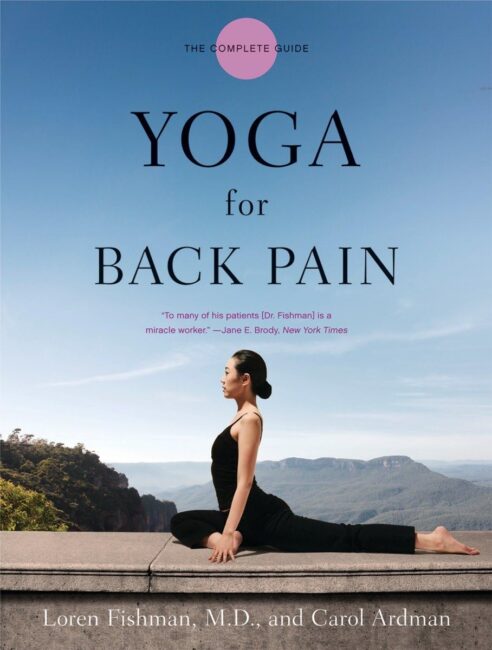
Book Review: Yoga for Back Pain by Dr. Loren Fishman

Back pain affects millions of people, yet many books offer the same generic advice: stretch more, strengthen your core, and improve your posture. Yoga for Back Pain by Dr. Loren Fishman takes a different approach by recognizing that not all back pain has the same cause—and therefore shouldn’t be treated the same way.

Dr. Fishman, a physician specializing in physical medicine and rehabilitation, combines his medical background with decades of yoga experience to create a practical guide for people looking to better understand and manage their discomfort. Rather than presenting yoga as a one-size-fits-all solution, the book focuses on matching specific yoga poses to different types of back conditions.

A Diagnosis-First Philosophy

One of the book’s greatest strengths is its emphasis on identifying the source of pain before recommending exercises.

Instead of encouraging readers to perform the same stretches regardless of their symptoms, Dr. Fishman explains that issues such as herniated discs, arthritis, spinal stenosis, piriformis syndrome, and muscle imbalances often require different approaches. That concept alone helps separate this book from many general fitness or self-help guides.

Easy to Follow

Although some familiarity with yoga is helpful, the book is designed so beginners can follow along.

Each posture includes photographs, detailed instructions, and notes about who should—or shouldn’t—perform the movement. Modifications are also included, making many of the poses accessible for readers who have limited flexibility or reduced mobility.

Rather than trying to impress experienced yogis, the book focuses on helping everyday people move more comfortably.

What Makes It Different?

Many back pain resources concentrate solely on strengthening muscles or reducing inflammation. Yoga for Back Pain instead emphasizes improving mobility, balance, flexibility, breathing, and posture while tailoring exercises to individual conditions.

That personalized philosophy reflects modern thinking that back pain often has multiple contributing factors and may respond better to targeted movement than simply resting or avoiding activity altogether. Research on yoga for chronic low back pain suggests it can provide modest improvements in pain and physical function for many people, although results vary by individual and condition.

Who Should Read This Book?

This book is an excellent resource for:

  • Adults with recurring lower back pain.
  • People interested in conservative, non-surgical approaches.
  • Yoga practitioners wanting a better understanding of spinal health.
  • Individuals looking to supplement physical therapy or physician recommendations with guided movement.

It is less suited for someone looking for a quick “10-minute fix.” Instead, it encourages readers to understand the mechanics of their back pain and build healthier movement habits over time.

Final Thoughts

Yoga for Back Pain stands out because it blends medical knowledge with practical yoga instruction instead of relying on vague wellness advice. Dr. Fishman approaches back pain as a problem that deserves careful evaluation, not a condition with a universal solution.

For readers willing to invest some time learning about how their spine works and practicing the recommended movements consistently, this book offers a thoughtful and evidence-informed approach. While no single book can eliminate every cause of back pain, Yoga for Back Pain provides useful tools that many readers may find valuable as part of a broader strategy for improving mobility, reducing discomfort, and maintaining long-term spinal health.

Open post

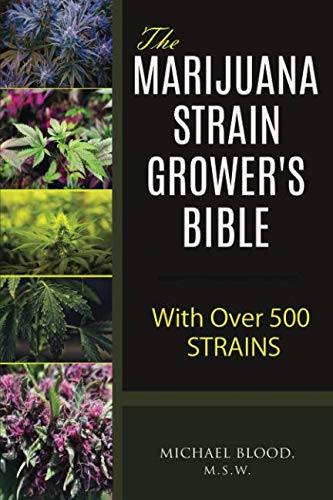
Book Review: The Marijuana Strain Grower’s Bible by Michael Blood

Michael Blood’s The Marijuana Strain Grower’s Bible isn’t a “how to grow weed 101” manual. It’s more like a massive field guide — a catalog of over 500 cannabis strains with the kind of detail most growers spend years hunting down across forums, seed sites, and half-reliable blog posts.

What makes the book useful is its focus on real-world decision making. Instead of just listing pretty names, Blood compares strains by yield, THC and CBD levels, flowering time, climate tolerance, disease resistance, odor, and even the likelihood of side effects like anxiety or paranoia. For someone trying to choose between a short indoor plant that finishes fast and a towering outdoor producer that can handle cold fall nights, that information is gold.

I appreciated how practical the questions are. Do you want 38 grams or 9 kilos? A plant that needs heavy support or one that stands on its own? Something discreet or a strain that will perfume the whole neighborhood? The author clearly wrote this for growers who think about budgets, space, and risk — not just potency.

It’s important to know what the book isn’t. Blood openly says this is not a deep horticulture textbook. If you need step-by-step feeding schedules, lighting theory, or advanced pruning methods, you’ll still want guides like Jorge Cervantes or online videos. This book assumes you already understand the basics and want help choosing the right genetics.

With 4.3 stars on Amazon and solid reader feedback, it delivers what it promises: a single place to compare strains for medical use, commercial scale, or personal gardens. For anyone tired of chasing scattered info, this is a time-saver and a surprisingly enjoyable reference.


Verdict:
A practical, strain-focused encyclopedia — ideal for growers who want to match genetics to their goals instead of gambling on a name and a picture.

Open post

Book Review: 100 Best Cannabis Strains by Michael Blood

Cannabis consumers—whether curious beginners or seasoned connoisseurs—often face one challenge: how to pick the perfect strain.
With new hybrids appearing almost weekly, it can feel overwhelming to match the right flower to a specific mood or medical need.

That’s where 100 Best Cannabis Strains: A Pocket Guide for Medicinal and Recreational Use by Michael Blood (published November 24, 2020) earns its place on any enthusiast’s bookshelf.


A Compact but Deeply Useful Guide

This 200-plus page paperback packs an impressive amount of knowledge into a portable format.
Blood profiles 100 carefully chosen strains—classics like Bubba Kush and Jack Herer alongside modern stars such as Charlotte’s Web and Orange Tree.

Each entry includes:

  • Sativa/Indica ratio for understanding effects.
  • THC and CBD levels to gauge potency and therapeutic potential.
  • Medicinal benefits like pain relief, sleep aid, or anxiety reduction.
  • Possible side effects to help you consume responsibly.
  • High-quality strain images for quick visual identification.

The layout is clean and approachable, perfect for a coffee-table flip or a dispensary companion when you need a fast reference.


Recreational and Medicinal Readers Alike Benefit

What sets this book apart is its balance.
Blood doesn’t only cater to recreational users chasing a creative high or a mellow evening—he devotes equal space to therapeutic applications, from chronic pain to insomnia.

For example, he highlights Orange Tree as a gentle sleep ally and OG Kush for relaxation and mood support.
Each recommendation is based on well-researched cannabinoid profiles and practical user insights.


Author Expertise You Can Trust

Michael Blood, M.S.W., brings more than thirty years as a counselor and professor to his writing.
After turning to cannabis for his own health, he saw how scattered the information was for patients.
His professional background in social work and anthropology lends the book a thoughtful, evidence-based voice that stands out from purely anecdotal guides.


Who Will Love This Book

  • Home growers and hobbyists wanting to expand their strain knowledge.
  • Medical patients looking for precise guidance on symptom relief.
  • Dispensary shoppers who want a quick pocket reference before making a purchase.
  • Cannabis content creators and educators seeking accurate strain descriptions.

Final Take

Rated 4.3 out of 5 stars by readers, 100 Best Cannabis Strains is more than a list—it’s a roadmap through a fast-evolving landscape of genetics, flavors, and effects.
Whether you’re crafting edibles, planning your next grow, or simply chasing a new favorite high, this book helps you buy—and enjoy—smarter.

If your curiosity goes beyond reading and you’re ready to explore the most potent varieties available today, visit Strongest Marijuana Strain.com.
It’s a natural next stop for anyone inspired to discover, compare, or cultivate the world’s most powerful cannabis.


Verdict: A smart, portable guide that earns a permanent spot on every cannabis enthusiast’s shelf.

Open post

Arkansas Bucket List Adventure Guide — Editorial Review

Quick take: A skim-friendly, statewide idea generator. Great at sparking trips and content plans; light on deep local color.

What you’ll find

A checklist-style roundup of Arkansas destinations presented in short, practical entries. Expect straightforward “what/where/when” notes that make it easy to map a weekend or stitch together a road trip without wading through long essays.

You can buy it here at Amazon.

Where it shines

  • Breadth over depth: Covers a wide spread of regions so you’re not stuck in one city.
  • Skimmable format: Bite-size entries help you build a hit list fast.
  • Trip scaffolding: Good for plotting routes and timing (morning vs. sunset, seasonal picks).

Where it falls short

  • Template feel: Reads like a series guide; don’t expect insider storytelling.
  • Light visuals/maps: You’ll likely supplement directions and photos yourself.
  • Logistics > nuance: Solid on “what and where,” thinner on the “why it’s special.”

Best for

  • Weekenders and road-trippers who want quick destination prompts.
  • Creators and bloggers scouting shoot spots or city highlights.
  • Newcomers who need an at-a-glance starter list before going deeper.

Not ideal for

Readers who want trail specifics, historical context, or curated dining/lodging picks. Pair it with a local history, hiking, or city-specific guide if you prefer richer texture. This book was reviewed by ArkansasSecrets.com

Get value in 15 minutes

  1. Circle 8–10 spots near your base city.
  2. Cluster by neighborhood/region to cut drive time.
  3. Check current hours/closures and seasonality.
  4. Add one “wild card” stop for variety (mural, overlook, small museum).

Open post

Honest Review: How to Start an OnlyFans — A Step-by-Step Guide

The creator economy is booming, and more people are exploring platforms like OnlyFans as a way to monetize their creativity and personality. But starting out can feel overwhelming — from setting up your account to figuring out how to market yourself. That’s where How to Start an OnlyFans: A Step-by-Step Guide to Launching, Growing, and Monetizing Your OnlyFans Account by Sophia R. comes in.


What the Book Covers

This guide breaks down the entire process of building a successful OnlyFans account. It covers:

  • How to set up and optimize your profile.
  • Strategies for attracting and retaining fans.
  • Tips on pricing, promotion, and content planning.
  • Best practices for managing your time and treating your page like a business.

What makes the book stand out is its straightforward approach. It doesn’t overpromise quick riches but instead focuses on consistency, branding, and engagement — the real keys to long-term success.


Why It’s Useful for Creators

For beginners, this book acts like a checklist to get started without missing important steps. For more experienced creators, it serves as a reminder of the fundamentals while offering new strategies to refine an existing business.

It emphasizes authenticity — something fans value highly. That message lines up perfectly with what we see in places like hawaiihotfans.carrd.co where local creators succeed by blending their unique personality with smart marketing. It’s a reminder that success doesn’t come from copying others but from leaning into what makes you stand out.


Final Thoughts

How to Start an OnlyFans is not a magic wand, but it’s a valuable guide for anyone serious about turning OnlyFans into a real income stream. With its focus on professionalism and step-by-step execution, it’s the kind of resource that helps creators shift from hobbyists to business owners.

If you’re thinking about starting fresh or leveling up, this book is a great companion to help you approach the creator world with confidence and structure.

Open post

Exploring Hemp CBD Oil for Pain Relief by Jake Wood

In a world where natural remedies have gained significant ground, CBD oil has become a go-to for many seeking alternative pain relief. Hemp CBD Oil for Pain Relief by Jake Wood stands out as a comprehensive guide aimed at demystifying this wellness trend. Published independently, this 104-page paperback offers both beginners and the curious a clear path toward understanding—and even incorporating—CBD into their self-care routines.


What the Book Covers

  • Complete CBD Overview
    The book walks readers through the fundamentals of hemp-derived CBD oil, explaining how it may help relieve physical and mental suffering. It also promises to boost comfort for those exploring the supplement on their own.
  • Practical Recipe Section
    One standout feature is its inclusion of recipes. Whether you’re interested in topical balms, tinctures, or infused edibles, Wood provides hands-on guidance—making it helpful for readers ready to take the next step beyond theory.

Key Takeaways

  • Educational and Accessible
    Wood strikes a friendly, approachable tone—great for first-timers navigating CBD concepts, benefits, and practical uses for pain relief.
  • Balanced Presentation
    While advocating CBD’s potential, the book also leans into evidence-based discussion, encouraging informed decisions rather than hype.
  • Action-Oriented
    Beyond explaining “what” CBD is, the added recipes help readers “do”—empowering them to start creating their own formulations at home.

Broader Context on CBD and Pain Relief

The potential of CBD for managing various forms of chronic pain—such as arthritis, neuropathic conditions, fibromyalgia, and inflammation—has shown promise in early studies, though definitive clinical proof remains limited.
https://www.health.harvard.edu/pain/can-cbd-oil-help-manage-pain

While research continues, many health experts note that CBD may help reduce pain and inflammation in some conditions. Similarly, studies detail how CBD interacts with the body’s endocannabinoid system, potentially easing pain signals and inflammatory responses.

Yet, it’s important to emphasize caution: CBD products are not FDA-approved for chronic pain relief, and evidence in humans remains tentative. Applying this to Wood’s book, it’s best seen as helpful for personal exploration rather than a substitute for medical guidance.


Conclusion

Hemp CBD Oil for Pain Relief by Jake Wood is a thoughtful, user-friendly resource bridging the gap between curiosity and application. If you’re looking for a straightforward, well-rounded introduction to CBD—with practical recipes to back it up—this guide delivers. Paired with current scientific insights, it offers readers a grounded path forward in exploring hemp-derived CBD as a supplemental option in their wellness toolkit.

Scroll to top