A garden can start as a pleasant idea and quickly fill your weekends. You picture fresh tomatoes and flowers beside the back door. Then come the weeds, the digging, and another afternoon spent trying to keep everything under control.
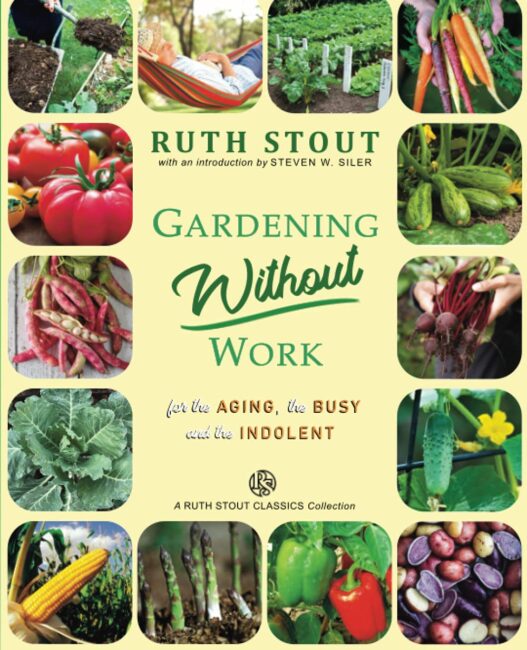
That is what makes Ruth Stout’s Gardening Without Work: For the Aging, the Busy and the Indolent appealing. She asks a useful question: how much of that work do we actually need to do?
First published in 1961, the book describes her approach to gardening with a permanent covering of organic mulch. It also reflects her determination to enjoy growing things without letting the chores take over her life.
Based on the published excerpts and contents, I think its greatest strength is the permission it gives gardeners to simplify.
A Simple Idea With Practical Benefits
Stout’s method centers on keeping the ground covered with organic material and adding more as it breaks down. Instead of repeatedly turning the soil and hoeing between plants, she lets that covering do much of the work.
The idea has practical support. Mulch helps suppress weeds, slows moisture loss, and contributes organic matter as it decomposes. Over time, those benefits can reduce the need for frequent cultivation and watering.
For someone who enjoys growing vegetables but dislikes spending every visit pulling weeds, that is a worthwhile change. You still tend the garden, but more of your attention can go toward the plants you intended to grow.
Her Attitude Is Part of the Appeal
The published excerpts suggest a writer who enjoyed questioning familiar advice. Stout is funny, direct, and thoroughly convinced by what she observed in her own garden. She explains her approach through experience, with plenty of personality along the way.
That makes the book appealing to someone who feels overwhelmed by gardening instructions. There is always another technique to learn, another tool to buy, or another job somebody says must be done before planting.
Stout’s approach encourages you to look closely at those jobs. If a simpler method works in your garden, you have a reason to use it.
I like that attitude. People with limited time or energy deserve a garden they can enjoy, and an experienced gardener’s willingness to simplify can be more encouraging than a long list of ideal conditions.
The Title Needs a Little Perspective
Gardening Without Work is a memorable title, though obtaining and spreading mulch is work in itself. Planting, harvesting, and watching for problems also remain part of gardening.
My reading of the promise is that the method can remove a substantial amount of repeated effort. Carrying mulch to a bed may save you from hoeing that same bed over and over.
The size of the garden matters, too. A small vegetable patch is a reasonable place to try the approach. Covering a large area requires more material and more effort to move it.
For a busy gardener, starting small makes the idea easier to put into practice. You can see what changes over a season before expanding.
Her Experience Is a Starting Point
Stout developed her approach in Connecticut. That matters when considering how closely to follow her recommendations elsewhere.
In a dry Southern California garden, I would use the book as inspiration and adapt the method to local conditions. Mulch can help retain moisture, but I would still plan for irrigation. Current extension guidance describes mulch as reducing watering needs, rather than reliably eliminating them.
I would also pay attention to the material used and how it behaves around the plants. General extension guidance recommends weed-free straw for vegetable gardens and keeping mulch clear of plant stems.
Those adjustments fit the spirit of learning from experience. Try an approach, observe the results, and make changes where your garden needs them.
A Good Companion to Gardening for Relaxation
The connection to relaxation is what interests me most about this book.
A garden becomes harder to enjoy when every visit begins with a backlog of chores. Reducing some of those chores leaves more opportunity to notice what is growing, pick something for dinner, or sit outside after watering.
Stout’s approach offers a practical way to make room for that experience. It encourages a garden that fits the gardener’s life.
Someone who wants a highly detailed modern reference may need another book alongside it. Someone who wants an experienced voice encouraging them to make gardening easier may find plenty to appreciate here.
I think Gardening Without Work is worth reading for that reason. Its lasting appeal is a sensible ambition: grow things you enjoy, question unnecessary effort, and leave yourself enough time to enjoy the garden.