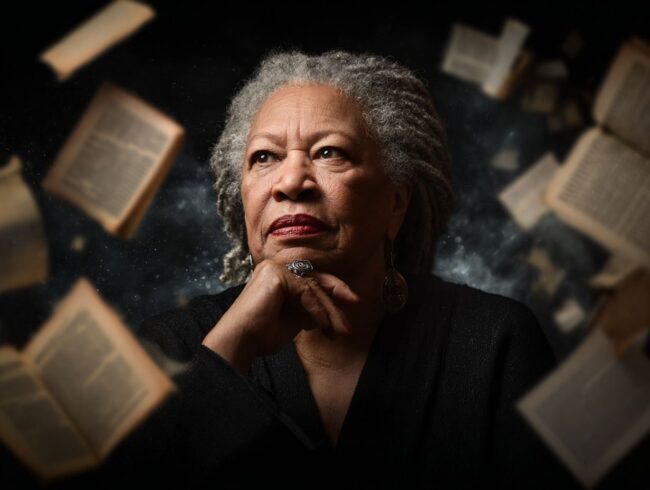
Toni Morrison didn’t just write books; she crafted worlds where language danced and history hummed with life. A literary titan, she shattered glass ceilings and opened the door to rich narratives steeped in African American experiences. From her early life to her Nobel-winning pen, this exploration will unveil her major works, the themes that define her genius, and her enduring impact on culture. Ready to dive into the legacy of a woman who redefined storytelling? Let’s turn the page!
Early Life and Background
Born in 1931 in the charming town of Lorain, Ohio, Toni Morrison’s formative years were steeped in the rich tapestry of her African American heritage, community storytelling, and the captivating art of storytelling. Her parents, George and Ramah Wofford, were the architects of her vibrant cultural identity, instilling in her an unshakeable sense of pride and community.
George, with roots tracing back to a lineage of former slaves and a career as a shipyard worker, often regaled her with tales of their ancestry, nurturing Morrison’s burgeoning appreciation for the power of narrative. Meanwhile, Ramah, a domestic worker with a fierce dedication to education, championed the virtues of reading, encouraging Toni to dive into books early and often.
These profound influences shaped her worldview, laying the groundwork for her deep understanding of racial and social issues-a foundation that would later illuminate her celebrated literary contributions. After all, one can only pen masterpieces when one’s life is a story worth telling!
Education and Influences
Morrison’s academic journey at Howard University and Cornell served as the fertile soil from which her literary voice sprouted, emphasizing the rich tapestry of African American literature and critical theory.
At Howard, she found herself under the tutelage of professors like Charles H. Rowell, who adeptly nudged her to explore the intricate nuances of Black identity through the lens of literature. Her courses in creative writing and African American studies were not just classes; they were gateways to profound explorations of race, gender, and history.
Meanwhile, at Cornell, she took a deep dive into the realm of critical theory, immersing herself in texts like Toni Cade Bambara’s “Gorilla, My Love” and the thought-provoking works of Franz Fanon.
These academic experiences laid a robust foundation that heavily influenced her acclaimed style, characterized by intricate characterization and a deep-rooted appreciation for cultural heritage. It seems that every lecture and reading was a stepping stone toward her literary brilliance, all while weaving a narrative that would resonate with generations to come.
Literary Career
Morrison’s literary career has gracefully unfolded over four decades, adorned with groundbreaking novels that tackle the intricate themes of identity, race, feminism, and trauma in American society.
One could say her prose serves as a mirror reflecting the complexities of the human experience, all while ensuring readers remain thoroughly engaged-who knew tackling serious issues could be so captivating?
Major Works Overview
From her debut novel, “The Bluest Eye,” to the Pulitzer Prize-winning masterpiece “Beloved,” Toni Morrison’s literary contributions offer a profound exploration of the African American experience through intricately woven narratives that could make even the most seasoned storyteller nod in admiration.
Her works frequently delve into themes of identity, community, social justice, and the pernicious effects of systemic racism, as if she’s skillfully peeling back layers of an onion that, while tear-inducing, reveals the richness within.
In “Song of Solomon” (1977), Morrison embarks on a quest to unearth heritage and the quest for personal significance, striking a chord with readers and igniting a renaissance of interest in African American literature that some might call a literary revival reminiscent of a phoenix rising from the ashes.
Meanwhile, “Paradise” (1997) engages with the complex interplay of gender and race within a close-knit community, proving that even in the most intimate settings, larger societal issues can be as inescapable as that one song stuck in your head.
Each of these novels garnered critical acclaim and sparked spirited discussions and adaptations, firmly establishing Morrison’s towering influence in both literature and culture, a legacy that continues to resonate with audiences today.
Themes and Styles
Morrison’s writing elegantly delves into the realms of identity, memory, and community, all wrapped up in her signature poetic flair and skillful character development. In masterworks like “Beloved,” she deftly intertwines personal anecdotes with collective histories, shedding light on the complexities of the African American experience-talk about a literary tapestry!
Her use of symbolism is nothing short of masterful; take, for instance, the haunting presence of Sethe’s deceased daughter, which serves as a poignant reminder of how memory clings to our identities like a shadow. Moreover, Morrison artfully incorporates techniques from oral traditions, crafting dialogue with rhythmic patterns that give her characters a voice that resonates long after the page is turned.
This intricate narrative style invites readers to dive headfirst into the struggles of her characters, ultimately reinforcing the profound interconnectedness of memory and community in shaping one’s sense of self. It’s a literary journey where every twist and turn offers both a challenge and a revelation, making us ponder just how much our past shapes our present.
Awards and Recognition

Toni Morrison’s literary prowess has garnered worldwide acclaim, earning her prestigious accolades such as the Nobel Prize in Literature and several Pulitzer Prizes.
It’s as if she collected awards like other authors collect bookmarks-each one a testament to her unparalleled ability to weave words into profound narratives.
Nobel Prize in Literature
In 1993, Morrison made history as the first African American woman to snag the Nobel Prize in Literature-an impressive accolade that underscores her significant contributions to the literary world. The Nobel Prize is no ordinary trophy; it is awarded based on stringent criteria such as literary quality, originality, and the impact on society.
Morrison’s masterpieces, particularly ‘Beloved’ and ‘Song of Solomon,’ delve into intricate themes of identity, race, and the African American experience, reverberating with audiences across the globe.
During her acceptance speech, she eloquently underscored the transformative power of language in shaping humanity, which prompted diverse audiences to examine their own stories. By championing marginalized voices, Morrison not only enriched the discourse on race and culture but also fostered a deeper awareness and understanding among communities worldwide.
A true literary luminary, she seamlessly combined wit and wisdom, leaving an indelible mark on the world of letters.
Other Notable Awards
Beyond the illustrious Nobel Prize, Morrison amassed an impressive collection of accolades, including the Pulitzer Prize for her seminal work ‘Beloved’ and the National Book Award, both of which serve as testaments to her literary genius.
Her influence is not just a whisper but a resounding echo, evidenced by the multitude of honorary degrees conferred upon her by prestigious institutions like Harvard and Yale.
These honors recognize her indelible contributions to literature and culture, as if to say, “Yes, we’ve noticed your brilliance!”
Morrison’s extraordinary ability to encapsulate the African American experience resonates deeply within her oeuvre, inspiring a legion of writers to follow in her formidable footsteps.
Each award not only shines a spotlight on her unparalleled talent but also underscores her status as a cultural icon, elevating crucial conversations about race, identity, and history in the landscape of American literature.
Her legacy is a vivid reminder of the transformative power of storytelling to shape society, proving that words can indeed wield a mighty influence.
Impact on Literature and Culture
Morrison’s work has profoundly reshaped the landscape of African American experiences in literature, transforming the way race and identity are perceived in American culture, while also addressing social issues and existentialism.
One might say she has taken a sledgehammer to outdated narratives, crafting a tapestry of stories that compel us to reconsider our views and assumptions.
Her literary genius ensures that discussions about race are not merely an academic exercise, but a vibrant dialogue that continues to resonate in contemporary society.
Representation of African American Experiences
Morrison’s narratives offer a refreshingly authentic glimpse into African American life, bravely challenging stereotypes while deftly bringing marginalized voices to the forefront of literary discourse, with a focus on representation and identity politics.
In masterpieces such as Beloved and Song of Solomon, Morrison intricately weaves together themes of community and trauma with the finesse of a skilled artisan. Take Beloved, for example; it courageously unveils the haunting legacy of slavery, revealing how trauma can etch itself into both individual and collective identities.
Through characters like Sethe, Morrison masterfully explores the complex terrain of maternal love and the sacrifices it often demands-because who knew love could be both a warm embrace and a heavy burden?
Likewise, in Song of Solomon, she artfully emphasizes resilience and the journey of self-discovery, reflecting the rich tapestry of experiences that define African American individuals.
These narratives are not just stories; they are invitations for readers to engage deeply with the historical and emotional landscapes of African American life-preferably with a cup of tea in hand, for this is a journey worth savoring.
Influence on Future Generations of Writers
Morrison’s literary legacy continues to serve as a beacon for new generations of writers, significantly influencing contemporary fiction, inspiring them to delve into themes of identity and social justice with fervor. Contemporary authors such as Jesmyn Ward, who adeptly navigates the complexities of race and community, and Claudia Rankine, who boldly confronts racial tensions, frequently cite Morrison as a foundational influence-like a literary godparent bestowing wisdom upon the next wave of talent.
Her themes resonate particularly well in today’s climate, where discussions surrounding identity, race, representation, and the critique of society are not just hot topics but are practically on fire. Writers like Ocean Vuong echo Morrison’s emphasis on personal narrative, using lyrical prose to intricately explore the notions of belonging and heritage.
This connection underscores Morrison’s lasting impact-like an indelible ink stain-on contemporary narratives, prompting them to boldly challenge societal norms and expectations through powerful storytelling.
Legacy and Continued Relevance
Morrison’s legacy endures, not merely as a testament to her literary brilliance but also through a delightful array of adaptations and a veritable scholarly feast of discussions surrounding her work.
It seems her words have sparked endless conversations, much like a fine wine that only gets better with age, proving that her impact on the literary canon is both profound and enduring.
Adaptations of Her Work
Several film adaptations of Morrison’s novels, such as ‘Beloved’ and ‘The Bluest Eye’, serve as prime examples of her narratives’ remarkable versatility and lasting charm. While these adaptations may take different stylistic routes, they deftly capture the essential themes of race, identity, and trauma that permeate her work.
Take, for instance, the film ‘Beloved’, directed by Jonathan Demme, which delves into the haunting legacy of slavery with a surreal twist. It artfully showcases Sethe’s torturous battle with her past, as if her memories are the uninvited guests at an already tense dinner party.
On the flip side, ‘The Bluest Eye’, helmed by Tanya Hamilton, turns the spotlight on Pecola, a young African American girl grappling with the crushing weight of societal beauty standards.
Both films not only mirror the profound depth of Morrison’s narratives but also challenge audiences to confront her poignant critiques of culture and history, making them essential for any discussion on American literature. One might say these adaptations are like engaging in a spirited debate with an old friend-provocative, insightful, and utterly unforgettable.
Ongoing Discussions and Studies
Scholarly debates surrounding Morrison’s themes of race, identity, and feminism continue to invigorate the realms of literary studies and cultural critiques today, proving that her work is as relevant as ever and cementing her place in Black literature.
Recent conferences, including the esteemed Modern Language Association’s annual gathering and the Toni Morrison Society’s symposium, have served as lively arenas for those in-the-know to engage in spirited discussions, further highlighting her literary relevance.
Reputable journals such as “African American Review” and “Novel: A Forum on Fiction” consistently churn out thought-provoking articles that dissect her oeuvre. Esteemed scholars like Carolyn M. Jones and Farah Jasmine Griffin are making significant contributions to this discourse, skillfully weaving Morrison’s narratives into the fabric of contemporary issues.
By tapping into these invaluable resources, researchers can significantly enhance their understanding and appreciation of Morrison’s lasting literary impact-like discovering a hidden gem in a well-stocked library.
Frequently Asked Questions
Who is Toni Morrison and why is she important?
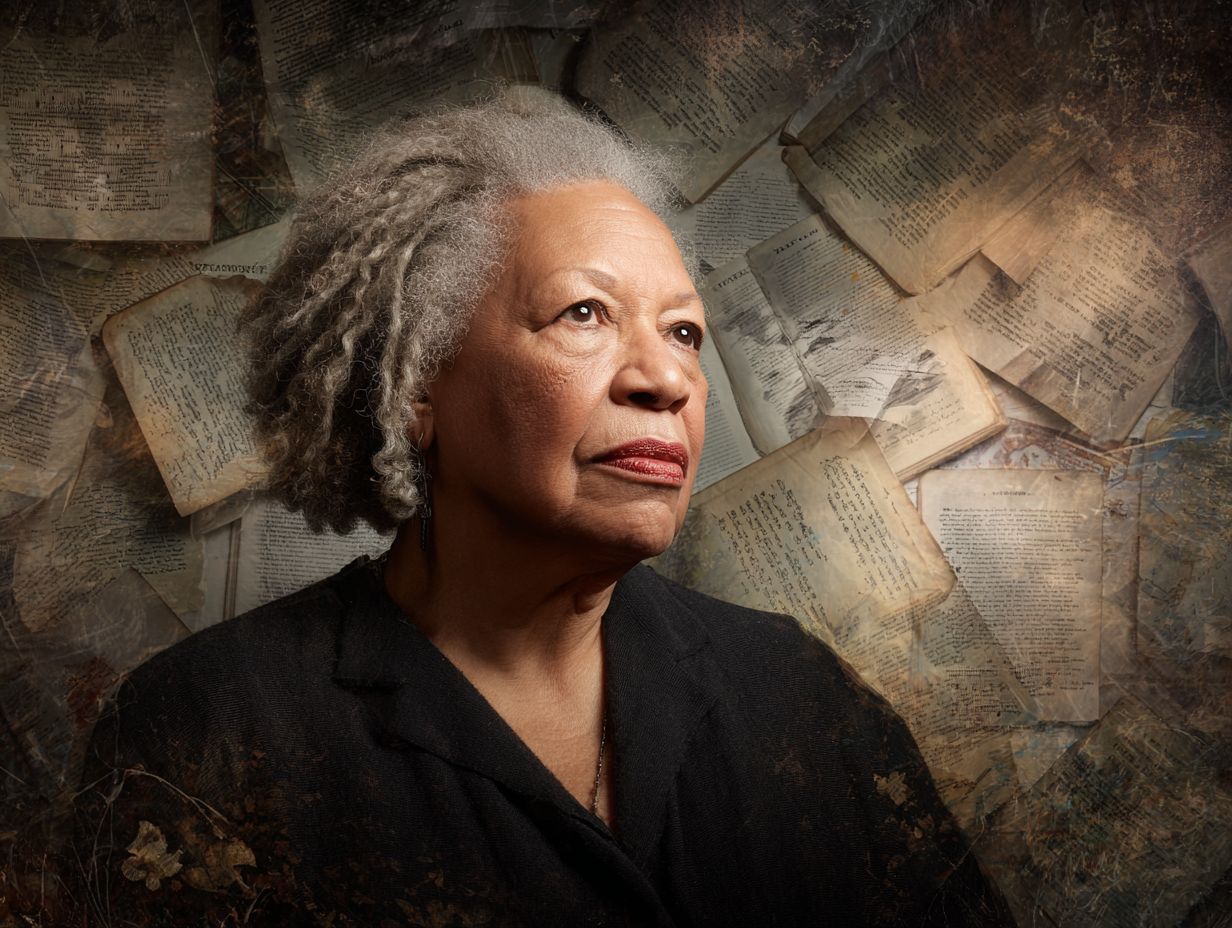
Toni Morrison was an American novelist, essayist, editor, and professor. She is best known for her critically acclaimed novels that explore themes of race, identity, and African American culture. She was the first African American woman to win the Nobel Prize in Literature in 1993 and her works continue to be studied and celebrated for their literary excellence and cultural impact.
What are some notable works by Toni Morrison?
Toni Morrison wrote 11 novels, including “Beloved “The Bluest Eye “Sula and “Song of Solomon”. She also wrote several essay collections, plays, and children’s books. Her novel “Beloved” won the Pulitzer Prize for Fiction in 1988 and is considered one of her most influential works.
How did Toni Morrison’s upbringing influence her writing?
Toni Morrison was born and raised in Lorain, Ohio, a predominantly African American community. Her parents taught her the importance of storytelling and instilled in her a deep appreciation for her African American culture and heritage. These experiences and influences are reflected in her writing, which often explores the complexities of race and the African American experience.
What impact did Toni Morrison have on the literary world?
Toni Morrison’s writing has had a profound impact on the literary world. She paved the way for other African American writers to gain recognition and brought attention to issues of race and identity in literature. Her works have been translated into numerous languages and continue to be widely read and studied, cementing her legacy as a literary icon.
What other achievements did Toni Morrison have in her career?
Plus her writing, Toni Morrison was also an editor at Random House, the first black woman to hold such a position. She helped to amplify the voices of other African American authors and mentored many aspiring writers. She also taught at several prestigious universities, including Princeton and Cornell, where she influenced countless students with her wisdom, knowledge, and mentorship.
How can I learn more about Toni Morrison’s life and legacy?
There are many resources available to learn more about Toni Morrison and her impact on literature and culture. You can read her books, watch interviews or documentaries about her, or visit the National Museum of African American History and Culture, which has a section dedicated to her life and work, highlighting her cultural impact. Additionally, there are numerous articles, essays, and academic papers that analyze and discuss her writing and legacy.